Sport Injuries
Runners Knee
Runner's knee (Patellofemoral pain syndrome) is a common overuse injury causing dull, aching pain around the front of the kneecap, often triggered by running, stair climbing, or prolonged sitting. It stems from improper kneecap tracking, often due to weak hip/leg muscles, poor form, or overtraining. Treatment focuses on rest, ice, and strengthening, with most cases improving within a few weeks.
Planter Fasciitis
is a common, painful condition caused by inflammation of the thick band of tissue (plantar fascia) across the bottom of the foot, typically causing intense heel pain, particularly with the first steps in the morning. It is often caused by repetitive strain, overuse, improper footwear, or excessive standing. Treatment involves rest, ice, supportive footwear, stretching.
Runners Nemesis
Posterior tibialis tendon dysfunction (PTTD) is a common "runner's nemesis" causing inner ankle pain, arch flattening, and weakness, often resulting from overpronation, overuse, or improper footwear. It presents as pain along the tendon that worsens with running, sometimes leading to a visible loss of the foot arch. Early, proactive treatment with rest, strengthening, and orthotics is critical to prevent long-term, irreversible arch collapse. Pain, swelling, and tenderness, specifically behind the medial malleolus (inner ankle bone), which may increase during or after running.
Muscle Strain
Muscle strains are graded by severity: Grade I (mild) involves minor fiber stretching/tears with minimal pain and no strength loss. Grade II (moderate) indicates partial tearing, significant pain, swelling, and reduced strength. Grade III (severe) represents a complete rupture/tear, severe pain, loss of function, and often requires surgery.
Ligament Sprain
Ligament sprains are classified into three grades based on the extent of damage to the ligament fibers and the resulting joint stability. Grade 1 mild Slight stretching or microscopic tearing of the ligament fibers. Grade 2 moderate A partial tear of the ligament. Grade 3 severe A complete tear or rupture of the ligament.
Concussion
A concussion is a mild traumatic brain injury caused by a blow to the head or body that causes the brain to move rapidly inside the skull. Symptoms include headaches, confusion, dizziness, nausea, and memory issues. Most concussions heal within a few days to a month, though some symptoms last longer. Treatment focuses on physical and cognitive rest followed by a graded gradual return to activity or sport facilitated by physiotherapist
Hematoma
A hematoma is a localized collection of clotted or partially clotted blood outside blood vessels, appearing as a, often painful, swollen, or bruised, rubbery lump under the skin or within body tissues. Caused by trauma, injuries.
Neorology
Stroke
A stroke is a medical emergency caused by interrupted blood flow (ischemic) or bleeding (hemorrhagic) in the brain, causing rapid cell death. Key risks include high blood pressure, smoking, diabetes, and heart disease. Symptoms like face drooping, arm weakness, and speech difficulty (F.A.S.T.) require immediate ambulance emergency calls. Physical therapy can help with training of return back to function post stroke.
Traumatic Brain Injury
A Traumatic Brain Injury (TBI) is damage to the brain resulting from an external force, such as a bump, blow, jolt, or penetrating object, which disrupts normal function. Symptoms range from mild (confusion, headache, brief loss of consciousness) to severe (coma, long-term disability). Causes include falls, vehicle accidents, and assaults. Immediate care focuses on stabilizing the patient, while rehabilitation is key to recovery.
Spinal Cord Injury
Spinal cord injuries (SCIs) are critical, often permanent damages to the spinal cord resulting from trauma (motor accidents, falls) or medical conditions, causing loss of sensation, motor function, or autonomic control below the injury site. They are classified as complete (total loss) or incomplete (partial function). Immediate emergency care is required, often requiring stabilization, surgery, and long-term rehabilitation. Physiotherapy helps with adaptation to new disability and training of functioning muscles.
Celebral Palsy
is a non-progressive neurological disorder caused by abnormal brain development or damage before, during, or shortly after birth, affecting muscle tone, movement, and posture. Symptoms include stiff or floppy muscles, poor coordination, tremors, and developmental delays in motor skills. While there is no cure, treatments like physical therapy and medication help manage symptoms.
Sciatica
Sciatica is pain radiating along the sciatic nerve from the lower back through the hips and down one leg, commonly caused by a herniated disc (90% of cases), bone spurs, or spinal stenosis. Symptoms include sharp, shooting, or burning pain, often accompanied by numbness, tingling, or weakness. While it usually improves with self-care like movement, exercises, and heat/cold therapy within weeks to months, severe or persistent cases may require physical therapy, medication, or surgery.
Neuro-musculoskeletal Conditions and
Orthopedics Conditions
• Back pain and Neck pain: Back and neck pain commonly result from muscle strain, poor posture, stress, or age-related wear, often causing stiffness and discomfort in the cervical spine and upper and lower back. Common causes: muscular issues, overuse, spasms, tension from stress, postural strain: prolonged computer use, poor sleeping position or improper lifting, Degeneration: Arthritis, osteoarthritis, narrowing of spine, Injury: Whiplash, accidents or falls, Structural issues: Herniated disc or pinched nerve
• Shoulder pain, strain, sprain
• Joint dislocation: A joint dislocation is a painful injury where bones in a joint are forced out of their normal positions, often causing visible deformity, swelling, and loss of function. Common causes include trauma from falls, sports, or accidents. Treatment involves urgent medical realignment (reduction), immobilization, and 6–12 weeks for recovery.
• Fractures: A bone fracture is a medical term for a broken or cracked bone, commonly caused by trauma like falls, accidents, or sports injuries, or by conditions like osteoporosis. Symptoms include severe pain, swelling, bruising, and deformity. Treatments involve immobilization with casts, splints, or surgery, with healing typically taking several weeks to months. Physical therapy helps with return to function
• Arthritis: Arthritis is a common, often chronic condition causing joint inflammation, pain, stiffness, and reduced range of motion. Major types include osteoarthritis (wear-and-tear) and inflammatory types like rheumatoid arthritis (autoimmune). While not curable, treatment focuses on relieving symptoms through medication, exercise, therapy, and sometimes surgery to manage pain and improve mobility.
• Nerve impingement: A nerve impingement, or pinched nerve, occurs when surrounding tissues—such as bone, cartilage, muscle, or tendons—compress a nerve, causing pain, numbness, tingling, or weakness. Common causes include injury, repetitive motions, poor posture, or conditions like arthritis or herniated discs. Most cases resolve with rest, physiotherapy
• Joint replacement
• Workability back and neck rehab programme
Injury on duty injuries and office ergonomics
•Falls injuries
•Sprains and strains
•Overuse injuries: joint degeneration, strains and sprains.
•Fractures
Contact Us
Call/WhatsApp:
Busiswe: 063 719 5161
Onitha: 078 941 1651
Address:
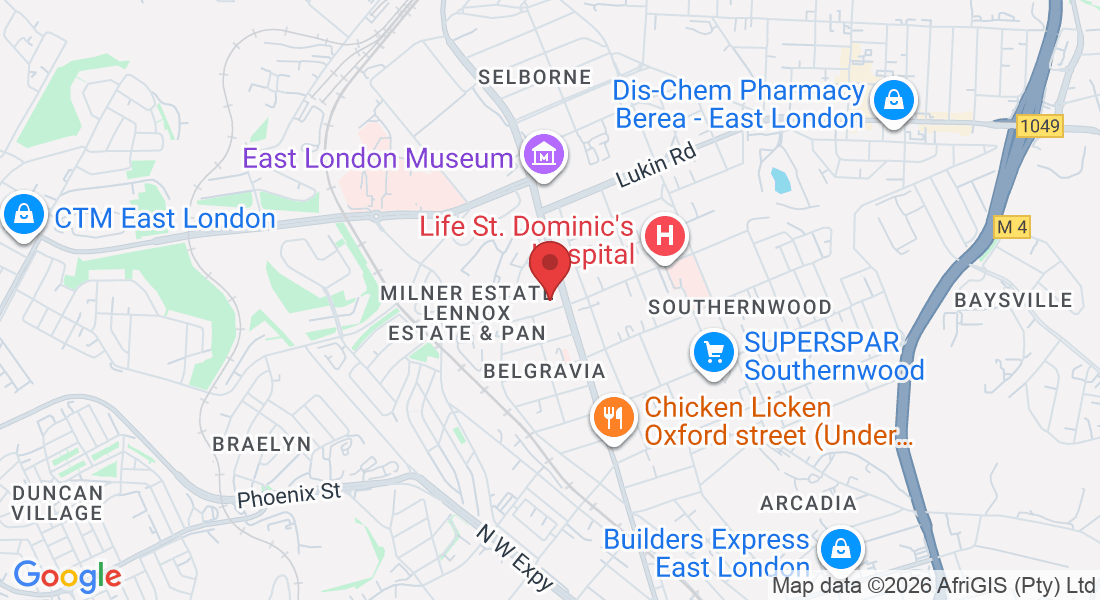
10st Marks Road
Southernwood
East London, 5201